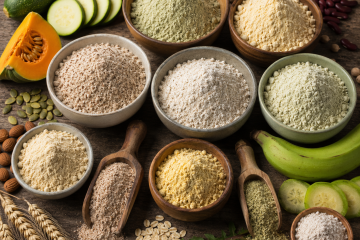
 Last week, I wrote about some of the most unusual flours you’ve probably never heard of—everything from zucchini flour to bean flour, pumpkin seed flour, plantain seed flour, and even flour made from weeds.
Of all the flours I mentioned, one seemed to generate more curiosity than the rest.
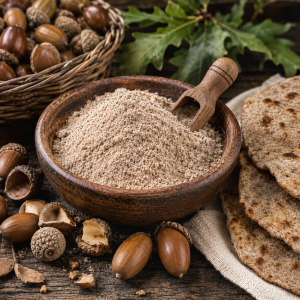
Acorn flour.
Several readers reached out wanting to know more about it, and I can understand why. After all, most of us spend our autumn weekends raking, sweeping, and bagging acorns.
The idea that those same acorns could become bread sounds a little ridiculous at first.
Until you realize that people have been doing exactly that for thousands of years.
In fact, entire cultures relied on acorns as a significant part of their diet. Native American tribes throughout North America developed sophisticated methods for gathering, processing, storing, and cooking acorns long before grocery stores existed.
Today, most of us walk right past one of the most abundant food sources in our neighborhoods without giving it a second thought.
That’s a shame because acorn flour is not only nutritious, it’s surprisingly versatile.
And before you dismiss the idea as some strange survival experiment, let me introduce you to my friend Debbie. She’s an absolute wizard when it comes to acorn flour and regularly teaches others how to transform what most people consider squirrel food into genuinely delicious meals. Knowing Debbie has convinced me that acorn flour isn’t just possible—it’s practical.
Before you start envisioning a single oak tree supplying a year’s worth of pancakes, let’s talk expectations. Acorn flour is certainly practical, but it isn’t magic.
As a rough estimate, expect to gather somewhere around 100 average-sized acorns to produce a cup of finished flour. Some species yield more, some less, and Mother Nature isn’t particularly concerned with standardized measurements.
Fortunately, oak trees tend to be generous producers. A mature oak can produce thousands of acorns in a single season, and during particularly productive mast years, that number can climb dramatically. Suddenly, gathering enough acorns for a batch of pancakes doesn’t seem quite so daunting.
Not All Acorns Are Created Equal
If you’re fortunate enough to have white oak trees nearby, you’ve hit the acorn jackpot.
White oak acorns generally contain fewer tannins than red oak acorns, making them easier to process and milder in flavor. Red oak acorns can certainly be used, but they often require more leaching before they’re pleasant to eat.
When gathering acorns, take a moment to inspect them carefully. If you notice a small, round hole in the shell, there’s a good chance a worm has already moved in and helped itself to the contents. Depending on how long the acorn has been sitting on the ground, the nut meat inside is often damaged or completely unusable.
Think of it as nature’s way of reminding us that we aren’t the only ones who appreciate free food.
Look for sound acorns with intact shells and discard any that are cracked, moldy, unusually light, or insect-damaged.
Turning Acorns Into Flour
The basic process is surprisingly simple, though it does require a little patience.
Start by gathering mature acorns and removing the shells. Some people find it easier to lightly toast the acorns first, which can make the shells crack and separate more readily, but this step isn’t necessary.
A nutcracker works well, as does a small hammer if you’re processing larger quantities. Remove the shell and set aside the nut meat.
At this point, grind the acorns into a coarse meal. A grain mill works beautifully, but a strong blender, food processor, or even a mortar and pestle will get the job done. In a pinch, our Native American ancestors used stone-on-stone grinding methods long before electricity came along.
Now it’s time to use water to cold-leach out the bitter tannins in the acorns.
Place your acorn meal into a large glass mason jar, filling it no more than halfway, and top the jar off with water. Cover the jar, give it a shake, and then place it in the refrigerator, basement, or root cellar.
After twenty-four hours, carefully pour off the water—which should have turned a bit reddish-brown—and refill with fresh, clear water. Again, shake and return it to cold storage for another twenty-four hours.
Repeat this process every day for three or four days.
How do you know when you’re done?
Taste it.
Not a spoonful, just a small sample of the acorn meal.
If the meal still tastes bitter or leaves an astringent, drying sensation in your mouth, continue the rinsing process. Once all traces of bitterness are gone, the tannins have been sufficiently removed.
If you intend to use the acorn meal immediately, you can drain the liquid by pouring the meal into a large piece of cheesecloth or a cheese bag, twisting and squeezing to remove as much water as possible.
If you plan to store it for future use, spread the meal onto dehydrator trays or baking sheets and dry it thoroughly. A food dehydrator works wonderfully at temperatures below 150°F. An oven set to its lowest temperature will also work. Check periodically until the meal is completely dry.
Once dried, grind the meal into a fine flour using a grain mill, blender, food processor, or whatever method you have available.
Congratulations.
You now have acorn flour.
What Does Acorn Flour Taste Like?
Most people are pleasantly surprised.
Acorn flour has a rich, nutty flavor that’s difficult to compare to anything else. It’s earthy without tasting “wild,” and it adds a depth of flavor that works beautifully in pancakes, muffins, breads, cookies, and flatbreads.
Think artisan bakery rather than survival food.
That’s probably one of the biggest misconceptions people have about acorn flour. They assume it’s something you’d only eat if there were no other options.
The truth is that many people choose to eat it because they genuinely enjoy it.
Acorn Flatbread
If you’re looking for a simple way to experience acorn flour, this recipe gets about as basic as it can be.
Ingredients
- 2 cups acorn flour
- 1/2 teaspoon salt
- 3/4 to 1 cup warm water
- 1 tablespoon oil (optional)
- Optional herbs such as dried rosemary, just a sprinkle
Directions
Mix the acorn flour and salt together in a bowl.
Slowly add water until a dough forms. Depending on the moisture content of your flour, you may need slightly more or less water.
Knead gently until the dough holds together.
Divide into small portions and flatten into thin rounds.
Cook on a lightly greased cast-iron skillet or griddle over medium heat for about 3 to 4 minutes per side, until lightly browned and cooked through.
Serve with butter, honey, jam, soup, stew, or whatever sounds good to you.
Simple.
Practical.
And remarkably similar to foods that have sustained people for generations.
The Bigger Lesson
What fascinates me most about acorn flour isn’t the flatbread.
It’s the perspective.
Most people see acorns as yard waste.
Others see them as food.
That’s often the difference between convenience and capability.
Preparedness isn’t merely about storing resources. It’s also about recognizing resources that already exist around us. The ability to look at a tree and see food where others see a cleanup chore is a skill that has served people well for centuries.
Will acorn flour replace the flour in your pantry?
Probably not.
But knowing how to make it expands your options. And preparedness is often nothing more than having more options than the average person.
The next time acorns start raining from the trees, you might find yourself looking at them a little differently.
After all, some of the best preparedness lessons are hiding in plain sight.

0 Comments