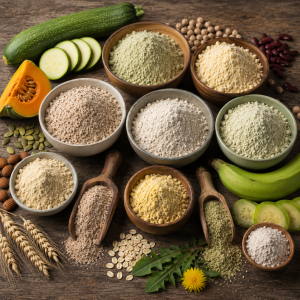
 Most people think flour comes from wheat.
Some adventurous bakers might mention corn flour, rice flour, almond flour, coconut flour, or even oat flour. But after that, the list tends to get pretty short.
The truth is that people have been turning plants, seeds, roots, nuts, and even weeds into flour for thousands of years. Long before grocery stores stocked twenty different baking options, our ancestors looked around at what was available and asked a simple question:
“Can I turn that into bread?”
Surprisingly often, the answer was yes.
Today, I’d like to introduce you to some of the lesser-known flours that have quietly fed people for generations.
Acorn Flour
Let’s start with one of my favorites.
Every autumn, millions of acorns fall to the ground and are largely ignored. Yet many Native American tribes relied heavily on acorns as a staple food source.
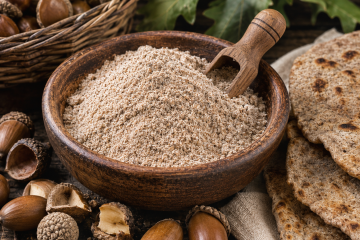
After removing the tannins through a simple leaching process, acorns can be dried, ground, and transformed into a rich, nutty flour that’s excellent for pancakes, muffins, and rustic breads.
In many parts of the country, people literally walk past potential flour every day without realizing it.
Plantain Seed Flour
No, not banana plantains.
I’m talking about the common plantain weed that seems determined to grow in every yard, sidewalk crack, and neglected patch of soil in America.
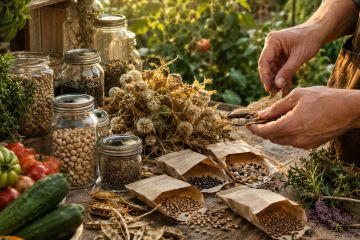
Those seed heads contain thousands of tiny seeds that can be dried and ground into a flour-like powder. While you’re probably not going to bake an entire loaf of bread from plantain seed flour, it can be blended with other flours and has been used traditionally as a nutritious supplement.
The next time you’re pulling weeds, you may be yanking up part of a flour mill.
Zucchini Flour
If you’ve ever grown zucchini, you know it has two settings: tiny and “How did this become the size of a baseball bat overnight?”
Most gardeners eventually find themselves giving zucchini away to neighbors, coworkers, and unsuspecting strangers in parking lots.
What many people don’t realize is that zucchini can be sliced, dehydrated until crisp, and ground into a surprisingly useful flour. The flavor is mild, making it easy to blend with other flours for breads, muffins, pancakes, and baked goods.
The first time I heard about zucchini flour, I thought it sounded ridiculous.
Then I tried it.
Now I see oversized zucchini as an opportunity rather than a problem.
Green Banana Flour
Before bananas ripen, they contain large amounts of resistant starch. When sliced, dehydrated, and ground, green bananas produce a surprisingly useful flour.
It’s become increasingly popular among people seeking alternative flours, but most folks have never heard of it.
The flavor is mild, and the flour works well in many baked goods.
Sweet Potato Flour
Sweet potatoes are already preparedness superstars thanks to their productivity and storage life.
What many people don’t realize is that they can also be sliced, dehydrated, and ground into flour.
The result adds natural sweetness and nutrition to a variety of recipes while creating another way to preserve a productive harvest.
Potato Flour
Most people assume potato flour is something manufactured in a factory somewhere.
In reality, potatoes can be dehydrated and ground into flour right at home. The resulting flour is often used to improve texture, retain moisture in baked goods, and stretch other flour supplies.
Considering how many families already grow or store potatoes, it’s a useful skill to have in your back pocket.
Bean Flour
Beans aren’t just for soup.
Many dried beans can be ground into flour and used in tortillas, flatbreads, pancakes, and protein-rich baked goods. Some of the best candidates include garbanzo beans (chickpeas), black beans, pinto beans, navy beans, great northern beans, and lentils.
Garbanzo bean flour is particularly popular around the world and has been used for centuries in everything from flatbreads to savory dishes. Lentil flour is another excellent option because it’s easy to grind and adds both protein and nutrition.
Considering how many preparedness-minded families already store buckets of dried beans, learning to turn some of those beans into flour can dramatically expand your menu options.
It’s one thing to store beans.
It’s another thing to realize they can become part of your baking pantry.
Pumpkin Seed Flour
After carving pumpkins or processing homegrown squash, most people toss the seeds into the compost pile.
Yet those same seeds can be dried and ground into a nutrient-dense flour rich in protein and healthy fats.
That’s a lot of value hiding in what many consider waste.
Corn Silk Flour
Most people look at an ear of corn and see the kernels.
Then they throw away everything else.
But those silky strands tucked beneath the husk have been used medicinally and nutritionally for generations. When dried thoroughly, corn silk can be ground into a fine powder and incorporated into other flour mixtures.
Will you be baking an entire loaf of bread from corn silk flour? Probably not today. But the knowledge may come in handy when every bit of food counts. More importantly, it’s another reminder that useful food resources often exist in places we’d never think to look. The next time you’re shucking corn, you may find yourself looking at those silky strands a little differently.
Rice Flour
Rice has fed civilizations for thousands of years, and it’s one of the most commonly stored preparedness foods in America. Yet many people never consider turning it into flour.
With a grain mill or a high-powered blender, stored rice can become a versatile flour suitable for noodles, flatbreads, pancakes, crackers, and countless other recipes. It’s especially useful because it allows you to create entirely different foods from an ingredient many preparedness-minded families already have in abundance.
A bucket of rice isn’t just future side dishes.
It’s also future flour.
That’s the kind of flexibility that can make a pantry far more useful than many people realize.
The Bigger Lesson
The real lesson isn’t that you should abandon wheat flour and start harvesting weeds from your backyard.
The lesson is that flour is far less limited than most people imagine.
When you begin looking at the world through the lens of capability rather than convenience, you start noticing possibilities where others see weeds, scraps, excess produce, or waste. Our ancestors understood this instinctively. They looked at acorns, potatoes, beans, corn, and dozens of other plants and saw food. We often look at the same things and see landscaping, compost, or something to throw away.
Learning to work with these alternative flours takes a little experimentation. Some absorb more water than others. Some are best blended with traditional flours. Some shine in breads while others work better in pancakes, crackers, tortillas, muffins, or flatbreads. But that’s how capability grows—one experiment at a time.
Add flour, water, salt, and a little time for resting, and you’d be surprised what can come out of your kitchen. Flatbreads, tortillas, crackers, dumplings, noodles, and countless other foods have sustained families for centuries using ingredients that many people overlook today.
In a crisis, those skills become even more valuable. Not only can they help feed your family, but they can also create something worth sharing, gifting, bartering, or trading. After all, people have been living on these various flours for generations. Entire cultures have built their cuisines around them.
Perhaps the greatest preparedness lesson isn’t learning how to make flour from acorns, zucchini, beans, or plantain seeds.
Perhaps it’s remembering that the baking aisle isn’t the only place flour comes from.
And that’s the kind of knowledge that can turn limitations into possibilities.
0 Comments