by Kellene
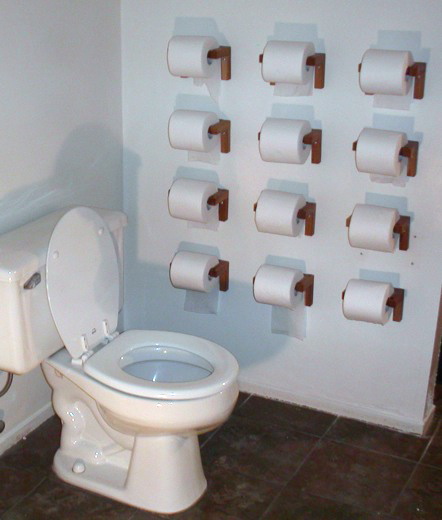
Do you have enough toilet paper in your storage?
Yesterday I came across an “emergency preparedness blog” that was alarmingly incorrect. It was a basic topic, but it was addressed in a very misguided manner. The author wrote about what she plans to use in an emergency for her toilet hygiene—rags instead of toilet paper. So as not to risk educating anyone incorrectly, rather than providing a link to the article I will instead provide a few summations of the article which she posted on this national “preppers” site. First of all, she was a big advocate of NOT using toilet paper during an occasion in which you had to rely on an outhouse, a hole in the ground, or some other such scenario. She labeled such a premise as useless, expensive, and unrealistic. Instead she offered up a suggestion of using old rags and then storing the “used rages” in a lidded bucket filled with borax, bleach, water and laundry detergent. She believes that such an option is “more eco-friendly” than toilet paper is. While I read the article, I could sense the enthusiasm that this person had for sharing her knowledge with the rest of the world. I believe she was also trying to make the alternative solution as easy as possible for others. I certainly don’t believe that she was attempting to mislead anyone. However, I physically cringed while I was reading it, realizing that she was setting up herself and anyone else who bought into her instructions, for a major sanitation problem—even a deadly one.
Toilet Paper Facts
To understand why planning on using a rag as opposed to toilet paper or another like product, I think I should first point out a few things about feces and urine that some folks may not realize. First of all, sewer treatment employees receive HAZARD PAY because of the danger of their work. In fact, sewer treatment employees receive more “disaster prevention training” annually than police officers do to improve their firearm skills. In other words, working with urine and feces is not a task to be taken lightly. The hazard in working with sewage isn’t just about the chemicals used to treat the sewers, but it’s also about working with the unavoidable—the waste itself.
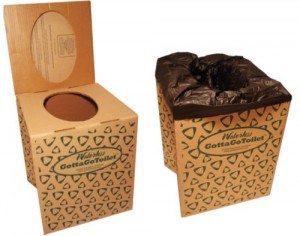
Sanitation…a necessary preparedenss topic!
Urine contains compounded amounts of toxins, nitrogen, nitrates, and ammonia. As such, it is NOT recommended that it is simply thrown out somewhere uncontained or unprotected. For those of you who are considering having two containers for solid and liquid waste in a worst case scenario, I beg you to rethink that plan. Solid matter actually needs the liquid to help it break down. Plus, it’s simply not realistic from a physiological standpoint to perfectly separate the two while someone is heeding a call from Mother Nature. Separating the two compounds will only create more problems which I don’t have room to address in this post. As urine and feces sit—especially in a heated environment—it develops deadly pathogens, dangerous combinations of microbes, bacteria, and viruses—including the well-known e-coli. This compound attracts flies which feed on it and then spread it from one location to another. The point being that handling such a compound in any way is not a wise decision. Staying away from it and disposing of it in all cases is critical.  Let’s also understand that a scenario that’s accompanied by the symptom of limited access toilet comforts that we’re presently used to is indicative of a serious scenario. Think about what would have to take place in order for a rationing of toilet paper to take place. (Other than the toilet paper shortage caused in 1973 by Johnny Carson jokingly telling his audience that there was a TP shortage. As a result, he actually CAUSED a shortage because millions of people cleaned off the shelves of TP that night. *grin*) Perhaps a natural disaster, a financial collapse, or act of war would cause such consequences. Any of these scenarios would mean that we could no longer take our present state of sanitation for granted. One of the most important aspects of establishing a society is to provide a community with reliable sanitation solutions. The reason is because poor sanitation can literally kill an entire community within a 50 meter radius in as little as 30 days. Bacteria, disease, and viruses are no respecter of persons, borders, or bank accounts. Thus preventing the spread of such must be diligently practiced at the root of its origins. If sanitation is not practiced with the utmost of our capabilities during everyday or dire circumstances, then disease and death will speedily run rampant. Remember disease is not easily curtailed to a specific environment. Disease is no respecter of persons, boundaries, or social positions. Keep in mind that due to our easy methods of travel, disease can spread faster than it ever has in history. That’s a significant statement considering that the Spanish Flu spread to over one-third of the earth in a matter of only three months—this prior to the availability of speedy international travel.

Anyone want a corn husk? Anyone?
Preparing for alternative sanitation solutions can be practical, comfortable, and realistic. The use of toilet paper should not be viewed as a luxury that can be easily dismissed. While we should be aware of alternative options such as corn husks, phone book pages, or newspapers, it’s important that we recognize the need to provide us with a safe distance, minimal exposure, and safe disposal of our hazardous waste. Seaweed is also a good alternative as it’s got healing properties with it as well. The fact of the matter is ALL of these aforementioned alternative options are much safer options for you versus you planning on using rags and cleaning them as you go. To be blunt, planning on using cloth or rags is not an ideal “plan B.” Just by nature of the rag method you are more prone to come into contact with the fecal matter. The longer it “hangs around,” being stored in buckets, being washed, etc, the more likely that contact is. Additionally, the rag method requires storage of the fecal covered rags until you wash them. The storage—especially with any heat involved, will compound the hazardous toxins as the bucket of used rags sit. Something else I think we underestimate is that smells, especially unpleasant ones, strongly affect our morale. Unpleasant smells are not simply an affront on the senses. They are also an inhalation of dangerous microbes and airborne bacteria. If you’re storing the used rags, the smell lingers throughout your entire living environment. Instead it should be burned or broken down with something like Chemisan. It would definitely stink (excuse the pun) if you couldn’t enjoy the smells of sautéed garlic and onion because the wafting aroma of the outhouse overpowered it.  Lastly, in order to use rags for this particular hygiene care, most believe they need to use heavy chemicals such as borax or chlorine—neither of which are eco-friendly. Where can you safely dispose of those chemicals?? If you absolutely HAVE to use rags, consider instead using essential oils to clean the rags with such as lavender, lemon, and tea tree oil. Exposing yourself to potential contact with fecal matter is such a bad idea, that even the reusable toilet wipe companies don’t recommend their product for use for anything else except straight urine. Additionally, it requires much more physical energy and water to take care of than does TP. You can never underestimate the importance of conserving physical energy and maintaining as much “normalcy” as possible during a crisis scenario. On the other side of the debate, toilet paper can easily be broken down or safely disposed of. It can easily be burned or buried. My favorite method of breaking down fecal matter and TP is the use of Chemisan. Chemisan eliminates a great deal of the smell, deadly pathogens and breaks it down completely in as little as two weeks leaving behind the equivalent of a soil. Contrary to some opinions, toilet paper does not have to be expensive. For over a year now, thanks to coupons, I have put my mandatory price point on toilet paper at 25 cents a roll. I don’t pay any more than that, ever. But when I get it at that price, I do purchase as much as my budget that week will permit me. I also use that same strategy on anything else I purchase and bring into my home. I set a price point and stick to it. This means that I don’t have to choose BETWEEN having wheat or toilet paper. I get to have what I, and my loved ones, need for every anticipated event. Planning well everyday means that you don’t have to choose between one vital necessity and another. Knowing you have all of the bases covered means more mental strength for you to deal with the other aspects of a survival scenario which may test you.
Toilet Paper as a Multi-Purpose Product
Also as an alternative view of the blog I’m referencing, toilet paper is a multi-purpose product. It’s often used by cost conscious individuals in lieu of facial tissue. It’s also used by some as a source of cooking fuel (along with isopropyl alcohol)—a waste to me considering so many other cooking alternatives, but to each his own. And hey, TP has even been used by the US. Military as camouflage during the Gulf War! The comfort factor of toilet paper should not be underestimated either. Promoting familiarity during a crisis scenario is as important as your medical supplies. This is why a survey two years ago revealed that over half of all of the respondents said that they would choose food first, then water, and then toilet paper as their supplies on a deserted island. In other words, it’s more important to peoples psyche and comfort than perhaps this author realized. I suspect more people didn’t mention toilet paper simply because it was off their radar. Perhaps a gorgeous companion and their favorite rock band made the list instead. When there is any kind of an “ick” factor involved, it’s much harder to expect persons to change their habits, even in a survival scenario. Trying to do so will inevitably bring about stress. If you’re using moss and leaves right now everyday, then you won’t have any problem with those items in the future—unless you don’t stock up. Otherwise, having what you’re familiar with for such an inevitable part of life is critical to your mental health. Bottom line, in the event of true emergency scenario, having ample toilet paper will NOT be the least of your concerns. It falls in line with the Physical and Medical aspects of preparedness which puts it in the position of priority number 3 and 4 out of the Ten Principles of Preparedness. So, watch for the sales, know how much your family uses in a week, and plan accordingly.



77 Comments
Louise · March 3, 2010 at 6:14 pm
I thought that this was a well needed entry. And I’m going to purchase more tp as soon as I can. I can see where this misguided person kinda went with a cloth diaper analogy of putting the used rags in a bucket with cleaner. Like you said this would be very labor intensive and dangerous. I just wanted to mention, being from an area where people still use “honeybuckets” indoor buckets for toilets, that with a large family these fill up quickly and the use of chemeicals to control odor can not be overstated. Also when possible an outhouse is a huge improvement.
jamie · March 3, 2010 at 7:30 pm
This is 1 area I wory the most about. I have studied up on it and I’m prepared. But I can’t control what other folks will do out of ignorance. The idea of human waste along with bleach and Borox going into rivers and streams or getting into the water table is truly frightening.
Do you know if Chemisan can be used in RVs?
Kellene · March 3, 2010 at 7:40 pm
yes, it can
jamie · March 3, 2010 at 7:43 pm
Thank you, Great I got some other folks looking for a solution I’ll get them the the Fivestar website.
Kathy · March 3, 2010 at 10:23 pm
That cardboard portable toilet shown in your article looks very unstable. I would be afraid to park myself on it, let alone my 200+ lb. husband. I have visions of it collapsing or teetering. What other suggestion do you have for a portable toilet? What do you think of composting toilets?
Kellene · March 3, 2010 at 11:00 pm
It does look unstable, doesn’t it. Actually I love that product and I’m over 200 pounds, but it’s not the answer for long-term displacement. An outhouse will need to be considered for sure. But also, you can get one of those Luggable Loo lids that go on top of a 5 or 6 gallon bucket. Those are much better for long term.
Sandra · July 26, 2013 at 7:31 pm
We’ve been thinking about buying a bedside toilet – the kind used in hospitals or for a sick/elderly person. It would be stable & has the removeable pot under the seat.
Another alternative to TP & phone books is Coffee Filters. They are inexpensive and take up very little room. Wouldn’t be as soft but would serve the purpose in a SHTF situation.
Jackie · March 4, 2010 at 1:08 am
What a fantastic entry. I learned something else new and actually have sent off an e-mail to the company who makes ChemiSan. I think it would be fantastic for a lot of things, septic tanks, outhouses and all that. I enjoy this site very much. Thank you.
Dr. Necessary · March 4, 2010 at 2:28 am
This was a very important and informative blog tonight. Thank you for essential information for all of us. Would you also comment on how women should prepare for supplies for their menstrual cycle. I think people will run out of pads and tampons at some point in an emergency.
Kathy · March 4, 2010 at 4:01 am
You can buy a “menstrual cup” which is reusable. My daughter tried one out once and it was a bit uncomfortable to take out but they are washable and reusable. For sanitary pads, I would a supply as big as t.p.
atasteofcreole · August 24, 2014 at 2:30 pm
and what do you do about
and what do you do about disposal? i advocate rags NOT tp.
you advocate CLOTH diapers don’t you? same thing.
no one seems to THINK about what do in an ACTUAL situation.
I HAVE. I survived Katrina in the french quarter. you can “hide out” in your house/apt; but what are you going to do when you are over run with rubbish, diapers and maxi pads?!?!
Kellene · March 4, 2010 at 4:31 am
Yes, if you do a search on this site for “menses” you will see an article that I wrote specifically for that. (I think it’s called Menses Preparedness). Anyway, the solution is actually ideal for today as well as during rougher times. I store lots of pads, but for medical purposes, not menses.
Marci · March 4, 2010 at 2:37 am
A few questions:
1. I’m assuming it’s one chemisan application per bag. Do they tell you what constitutes a “full” bag?
2. What do you do with the bag when it is full? bury it? wait for it to decompose and throw it in your garden?
3. If you wanted to “test” it now…would you flush it? throw it out with your trash? Is that legal?
Anything else to consider?
Thanks
Kellene · March 4, 2010 at 4:37 am
1) after your first use, you add the littel bad of Chemisan. Then when it’s about 2/3rd full you’ll discard the bag.
2) You will want to bury the bag. It decomposes in a matter of weeks in soil. But will take forever to decompose in gravel.
3) If you wanted to become familiar with the Chemisan process now, yes, you could simply throw it in the trash. It’s more biodegradable than diapers and wipes.
The ChemiSan toilets are intended for a couple of months of use. The company is currently creating a more long-term solution using PVC for scenarios such as what Haiti is experiencing. The present method is water proof, but it is merely a strengthened and treated cardboard, so you would need a few of them if you were going to rely on them long-term.
Bob G · February 24, 2013 at 8:19 am
This is my second posting, and looking at the dates on these comments, I wonder it this is still an active thread.
Anyway, I just wanted to mention that I bought two used “handicapped” toilet chairs from the local rescue mission. Each were in excellent condition, both had lids just like on a toilet in the home, both had a container to catch the “fallout.” While this may be unacceptable to some users, it is an alternative to sitting on an old board in an outhouse that may or may not have spiders underneath it or on a five-gallon can. And, they are easily portable.
As a former military supply officer, the standard we always used while on deployment at sea was fifty rolls of tp per person per year. Woe be unto the supply officer who ran out of tp in mid-deployment!
Kellene Bishop · February 25, 2013 at 8:03 am
Bob, I’m never on here on the Sabbath and rarely on on Saturdays to approve comments, as such, when someone new posts over the weekend, they’ll have to wait a while for their comment to show, but yes, all of our articles are active.
I really like your idea of using those kinds of toilets. It sure would be ideal during the cold winter months during the night and just disposing of the waste in the morning.
Daniel Freeman · March 21, 2013 at 8:39 pm
Kellene, I love your information here and enjoyed watching you on the Doomsday Preppers series, but my question was about disposing of our waste after the bag is 2/3 full. I assume that “we” would be using plastic bags? Would these bags really breakdown that quickly? I suppose with the fecal/urine matter inside, it helps with the breakdown. I have just never done that myself. Thank you
Sue O · March 4, 2010 at 2:52 am
TP has always been high on my list. I have 24-packs of big-rolls under my bed. Hearing the newspaper-in-the-loo stories of my parents from World War II has made me never want to go there!
Kellene · March 4, 2010 at 4:33 am
Personally, I feel a bit emotionally scarred having to use a “peanut butter” bucket at night when I was kid on the farm. So I’m all about averting any discomfort in this regard.
Cara · March 4, 2010 at 5:43 am
Great post. I’m all about using TP. But what about diapers for babies?
I’ve used cloth diapers with my two children. I currently wash out solids in the toilet, store in a closed pail, then launder with non-chlorine bleach and laundry detergent. We’ve liked them because they don’t leak nearly as much and our children’s skin has done better. Cloth wipes are much easier for cleaning up breastfed diapers than disposable wipes or even toilet paper, and we’ve found the kids get cleaner with them (the disposable ones are often too moist). But I definitely prefer TP for myself.
I’ve seen other prep sites recommend cloth diapers because you can continue to use them. I’ve even seen cloth menstrual pads (but the cup definitely sounds better).
How do you recommend handling diapers if we’re in a “no TP / sewer” situation?
Kellene · March 4, 2010 at 7:13 am
I don’t see a lot of alternative options for diapers. I’m planning on using cloth. But using cloth diapers for one or two family members is a heck of a lot less hazardous than intending on a whole family, let alone a community to use rags. Fortunately, physiologically, their little bodies are not as full of toxins like the adult bodies are. If I were you, I’d still plan on using them, but I’d look for an essential oils option for cleaning them rather than harsh chemicals. I also would have plenty of “food handling gloves” on hand, just in case.
ToughTimes · March 4, 2010 at 7:28 am
Glad you took the time to correct, at least in my mind, the info from that other article. This whole winter I have worried what it would be like to throw on hat, gloves and snowboots to tromp through the snow to a cold outhouse(and for me that means 2-3 times after dark & before midnight)so I asked my granny…she said the chamber pot was her friend. Or honey-dew bucket and the rule was “no #2, just dew in the dew bucket”. They were dumped on the way out to do chores in the morning before breakfast. I was always intrigued by her stories of the great depression, guess things are soon to come full circle.
Another thing when it comes to toilet paper. Lessons on conserving,wipe/fold/wipe, used kleenex goes back in the pocket for next trip to outhouse…stuff like that, will be the job of the moms to teach because kids(everyone really) need to be conserving now in so many ways and not just in the bathroom, so the culture shock is an easy transition.
Scott · March 4, 2010 at 2:57 pm
Great post! The lady who suggested using rags instead of toilet paper was full of crap… (okay, sorry; I couldn’t resist…) Seriously, it’s the everyday items that we sometimes forget to stock up on – deodorant, toothpaste , toothbrushes, q-tips, floss, TP, etc. I have a year supply of toilet paper in storage but I think I’ll kick it up to 2+ years. (Does TP ever deteriorate or otherwise go bad?) It would no doubt make a great barter item as well.
Kellene · March 4, 2010 at 6:52 pm
Scott, TP does not go bad. Obviously you do need to prevent it from getting wet though, or it begins to break down immediately.
Michelle · March 6, 2010 at 5:39 am
I have seen tp start to break down without getting wet. It is made of paper. I’ve seen tp that is at least 10 years old and it was very “flakey”. As it was unrolled, it didn’t stay together as well as new tp does. fyi
Clarice · March 4, 2010 at 5:20 pm
Great article! I just got a years supply of TP for my family, thanks to coupons! I have a question though. 2 actually. I don’t know a lot about the chemisan but I think its fairly expensive, am I right? And if so then it is not the solution for anything longer than a week or two at the most? So I guess anything longer would require an outhouse. Would something like chemisan be needed in an outhouse? My next question is what do we do when we are surrounded by neighbors a lot closer than 50 meters, who are not going to be prepared with most things let alone sanitaion needs. How on earth can we avoid getting sick because of so many people being unprepared. Trying to educate/motivate them only goes so far(unfortunately), as you well know.
Nola · March 4, 2010 at 5:52 pm
Loved your article. Wondered WHERE you are able to find TP at 25 cents a roll. That sounds outstanding.
Kellene · March 4, 2010 at 6:16 pm
Nola, it’s always a combination of store specials on TP and existing TP coupons. I’ve gotten TP at this price at Walgreens, Wal-Mart, Smiths (which is like Krogers) and Macey’s which is an Associated Foods chain. I could do even better if I lived in the mid west where there are Krogers and in other areas of the country where there are CVS Pharmacies. It’s not about the strenght of the coupon. It’s about what it does in combination with a store promotion as well.
Kellene · March 4, 2010 at 6:12 pm
Right now FiveStarPreparedness has a group buy on these items this month. I believe that 30 applications of the ChemiSan for 35.45 (which should last you a month), and 14 of the small ChemiSan bags are 13.95. I think for a month that’s quite attractive personally given the serious nature. I think that group buy starts Monday the 8th of March.
Yes, I would also use the ChemiSan for the outhouse. I will also be using the diatomaceous earth.
Kim R · April 30, 2011 at 6:35 pm
Question: Is ChemiSan the same thing as the microbe-eating bacteria used to clean septic systems? Like Rex-Bac-T? If so, I’m wondering if it would be more afforadable to buy a bucket of that (I haven’t found ChemiSan in bulk so far). Just a thought, trying to research but am stunned at how many preparedness sites and books gloss over this very important information! Thanks so much for addressing it!
jamie · March 6, 2010 at 9:47 pm
Kellene is there a min. ammount you have to buy for the group buy discount?
I’ve already got the DE from Five Star. Great service from that store.
Mom and I have several RV’s we’d like to buy for but the budget only stretches so far. 🙂
Do you know if Chemisan has any effect on Septic Tanks? Good, bad or indifferent
Mom and I are prepping the rest of the family not so much. But we know who’s doorstep they will show up at if things go bad.
Kellene · March 7, 2010 at 2:40 am
In terms of limits and such, those are Five Star questions, so you’ll need to contact them. Sorry. Other than letting you guys in on what sales I see, I try to keep myself separate from that business.
I do know that Chemisan is perfectly fine for septic tanks.
jamie · March 7, 2010 at 2:57 am
What it is a “Group buy” We’ll probably buy any way but I like specifics before I commit other folks. Well we will get this all worked out. I hope they will post it Monday the 8th.. Hint
A little work I’m sure they at fivestar will prove to be a faboo company to deal with. I’m already very pleased with them.
Thanks again for the info on septics
Katie · April 10, 2010 at 10:20 pm
I know of many families who use “family cloth” (as they call it) instead of toilet paper. Are you saying that family cloth is never safe, or only if washers/hot water aren’t available? I agree that in a situation where there are no washers with water from hot water heaters, that wouldn’t be a good idea.
What kind of rolls are you talking about with respect to your 25 cent price point? Macey’s has 24 rolls of regular TP on sale for $3.98 right now (comes out to 17 cents per roll).
Kellene · April 18, 2010 at 1:16 am
Katie, what I’m saying is that there are a LOT of alternative methods that would be more sanitary and convenient before one must resort to a cloth.
I have purchase all kinds of brands of toilet paper for 25 cents a roll–everything from Charmin, Angel Soft, and Scott. That’s what happens when you use coupons. 🙂
Katie · April 10, 2010 at 10:21 pm
Oops, one more question —
How many regular sized rolls do you consider to be enough for 1 year? I need to pay attention to what my family uses, but what is an average?
Kellene · April 18, 2010 at 1:14 am
Katie, I don’t know what the average is as that’s a…um…rather private issue. 🙂 However, I prepare for my hubby and I to go through 2 rolls a week. A bit on the conservative side, but I’d rather be safe than sorry.
Nick · December 26, 2010 at 10:50 am
Kellene, I thought I’d commented on this post already, but I guess I hadn’t! I thought of your post when I read a letter that Jim Rawles just posted on Survivalblog:
http://www.survivalblog.com/2010/12/paper_or_plastic_–_that_is_th.html
And here’s a blog post of mine from last spring where I referenced your post about toilet paper:
http://survivalprep.net/2010/05/14/dont-wipe-out-your-toilet-paper-supply/
Personally, I have daily bouts with irritable bowel syndrome as a side effect of my fibromyalgia, so you can bet your bottom dollar I’m going to make sure I have plenty of toilet paper on hand no matter what the environmentalist wackos say about paper usage. Speaking of which, do you remember this news item from a few years ago when Sheryl Crow was saying there should be a limit on how much toilet paper people are allowed to use? That was one of the stupidest things I’ve ever heard in my life. Here’s one link about it:
http://news.bbc.co.uk/2/hi/6583067.stm
Crisco · March 31, 2012 at 5:57 pm
It’s always interesting that preppers think of their stomachs and avoid the end game..garbage in garbage out scenerio. The 6 gallon bucket with seat, doddle bags etc are part of our short term application, but disposal has always plagued my mind for the longterm. We even opted to purchase cheap lunch size brown bags to place used TP and then to burn it daily, decreasing the volume of waste material to urine/feces which can be handled with chemical applications. Chemisan was new to me, and on inquiry very costly. Does anyone have a viable “homemade” chemical preparation ? Saving grey water to prime your toilet tank until the sewer system fails, digging a trench or building an outhouse all have potential, but let’s admit it, this will not be an easy or pleasant situtation if we are forced to deal over the long haul. How is it handled in third world situations?
Kellene Bishop · April 1, 2012 at 1:28 am
just a little thought, as you’re eating more grains and drinking less water, your bowels will necessarily go through a rough spot and you will WISH up and down and back and forth that you had the softest of TP during that time.
Unfortunately, 3rd world scenarios are still SO far behind the times. All over the Philippines you see wall signs that say “Bawal Umihi Dito” (it’s forbidden to urinate here) because they just stop where they are and go–even the ladies will squat behind their umbrellas. They do have some raw sewage plumbing, but it’s a luxury and not yet the norm. But they do carry TP with them at least.
kara · August 22, 2012 at 9:52 pm
this doesn’t have anything to do with tp really but it does go along with it and sanitary needs…that is to say that i have been stocking up on panty liners to help extend the life and cleanliness of undergarments when doing laundry may be a lot less frequent then we are used to know.
Angela Hutson · October 20, 2012 at 2:14 am
Since I have gotten hooked on the prepping, toilet concerns have been my biggest issue. I know that I can’t just bury the “stuff” without causing health issues so I am liking the chemisan idea. I have read thru the posts and I still have a question on the chemisan. I am assuming from reading that they bags are multi use and you add the chemical after each time and then bury it when it is filled to a certain point. Am I even close? I looked at their site and am still confused. I would hate to spend that much money to only get one use out of a bag, but would hate it more to plan on multi uses and have it degrade in the house. There will be several people in our small world, including elderly and children. I want to get the most out of my money. Thanks for the help.
Kellene Bishop · October 20, 2012 at 4:33 am
yes, that’s accurate. Multi-use with layers of Chemisan until filled to an indicated point.
Lisa Wilson · January 9, 2013 at 8:26 am
I really disagree with you on thinking that using cloths is unsanitary. It is not unsanitary if you wash them. It is not stinky either. what do you think they used years before toilet paper was invented? I have used cloth pads too, in fact, thats what my grandma had me use & way more comfortable than store kind.
Kellene Bishop · January 9, 2013 at 9:16 am
You’re welcome to disagree. Unfortunately though, you’re missing some key data in your assumptions that “all was well” way back when in which cloths were used. Even world history events are opposed to that notion as, believe it or not, the prosperity of nations were closely connected to the implementation of flushing toilets AND toilet paper. Also, you’re assuming that water will be abundant–but that was already mentioned in the article.
Denise Russell · January 13, 2013 at 3:19 am
When I was trying to determine the time frame a 24 pack of tp was used in our household, I put the date of opening on the big bag and kept it in the closet. When I used the last roll, I figured out how many rolls in the time-frame we used, divided per person. Then you can add supplies if you know you will have other family in-house, etc. If you are rotating ALL supplies as you do your food pantry, your tp won’t deteriorate – IMHO. Thank you again for a thought provoking article…
Katherin Keegan · January 13, 2013 at 7:35 am
When preparing our BOBs, I make sure to put a roll of TP and a spade in each bag just in case. I have also debated weather it would be cheaper to create my own 5gal toilet or buy one at a camping store. I also need to checkout what ‘treatments’ there are to aid with smell control and biodegradability issues. I shudder to think about this issue in the large scale, long term situation. The psychological changes Americans will have to go through, will make or break many.
Kellene Bishop · January 13, 2013 at 9:24 am
Chemisan is one of the best products out there for ensuring biodegradability, in my opinion. It’s got aspects to it that are unmatched by other similar products in the industry.
Ray White · July 22, 2013 at 7:49 pm
Kellene,
Where do you get Chemisan? I’ve Googled it and their website is down and it’s “out of stock” everywhere I look.
Kellene Bishop · July 23, 2013 at 9:00 pm
I wonder if they aren’t out of business, Ray. I’m sorry about that. I could have sworn that they are recently at a prepping trade show. I guess I’ll have to look for another alternative.
Kellene Bishop · January 13, 2013 at 9:25 am
I just put the date on the inside of the cardboard roll when I put it on the dispenser and then based on that strategy for 4 weeks I did the math.
Kathy · January 13, 2013 at 10:16 am
I heard that paper falls apart..how long can you store it before siverfish and air gets to it? i’d like to stock up!
Gwenivere · January 13, 2013 at 11:08 am
Kellene:
While I am almost always in your corner, I have to disagree with you on this one! I have lived without TP several times in my life and it can be done in a sanitary manner. (I may have been the one that wrote the article about going without TP that you mentioned, lol! I know I posted one on my blog once)
I do have some TP in my preps, but consider it only for medical emergency use.
If someone is extremely ill and cannot make it to the bathroom, TP will be a welcome convenience.
Otherwise, wash cloths, yes, in a bucket to sanitize them after use, then washed thoroughly will suffice for me and mine.
We will have composting toilets…after living in the desert, I find the very idea of using water to flush away bodily wastes abhorrent! (BTW, human feces deposited on the ground from chamber pots of *honey buckets* will turn to dust within 4 to 7 days out here in the dry climes of the desert!)
We are currently on the hunt for our retirement home and one thing that has always been a priority is finding a house that can be *retro-fitted* to accommodate composting toilets and an efficient *gray water* system. The amount of water used in this country to flush toilets is almost criminal (IMHO)! Read the Humanure Handbook for more info on actually using bodily wastes in a productive (and SAFE) manner.
Also, the amount of energy used to produce toilet paper, and the amount of trees and the amount of water used to make it as well should give one pause.There is a startling amount of pollution involved in the manufacture of TP as well!
My maternal grandmother would buy toweling fabric and sew up wash cloths for the purpose of TP. Being a country farm wife, she did her laundry outside. First, sheets would be boiled (yes, BOILED) and washed outside in her laundry kettle. Then they were rinsed and wrung out and hung up to dry. Then, the clothing, with the less soiled clothes first down to my grandad’s work clothes, until finally, the *poop rags*. She made her own soap, so an extra cup or two of it grated up was thrown in with the rags. They were thoroughly boiled, scrubbed on a washboard and then boiled and rinsed and hung on the line to dry. No one in her house ever got sick from using *poop rags*. Yes, a lot of labor involved. But if we get down to off grid living and you can’t run down to CVS to restock your TP, it is a viable alternative! (For those curious, the wash water was poured near the garden when it cooled off. No one ever got sick from the food out of her garden, either!)
Everybody poops, Kellene, it is just in how we dispose of it that we are different! Yes, I get kind of hysterical at people wasting water…I admit it. (Really. Don’t even get me started on golf courses in the desert and how much water they use! ARGGGGHHHH!)
But, what I am comfortable with and what someone else is comfortable with may be worlds apart. You may think I am taking risks with my health, I may think you are taking risks with yours, as we have differing opinions on how to dispose of bodily wastes.
In the end, however, we are both striving for self-sufficient lifestyles where we are prepped for disasters (natural or man-made) and confident in our ability to provide for our families well-being.
So…if you come to see me after TEOTWAWKI, bring your own TP…..*grin*
Melissa · February 1, 2013 at 5:53 am
I love this comment! And I am inclined to agree. I keep TP too but I am not reliant on it lasting. For that I have microfiber cloths with a soft mesh on one side (3 for a buck @ dollar tree I believe) I bout 2 dozen per family member and I have a bucket with a hole in its lid and a very sturdy plunger for washing these. I don’t see the need for bleach but I do have a recipe to turn a bar of laundry soap into a hair gel consistency that I store in a big wide mouthed pickle jar. 1 bar filled a jar an a half use about a quarter cup and boiled water then boiling water again for the rinse and hang to dry in the sun when possible. Granted you wouldn’t want to mix these up with cloths for anything else but they can be safely stored in the bucket and washed every day. With enough cloths for 2 days it is a feasible option. Seriously how long do you think to will last? If SHTF its going to run out sometime! I also store cloth diapers & pads. Young girls (under 20) really shouldn’t use anything that is meant to be inserted reusable or not. They aren’t made for the narrow small parts that non 100% developed girls have.
And a package of yeast a month in an out house of septic system will naturally breakdown waste safely and quickly. Everyone I know with an outhouse at camp and/or a septic (not public sewage) system uses this with NO issues 60+ years and my grandparents have never had a septic issue.
I agree with the above if you visit me post SHTF bring your own TP!
Kellene Bishop · January 13, 2013 at 12:06 pm
The key is to handle TP like you do all of your essentials–rotate them…I’ve never had a problem with any of my TP or other paper goods degrading or getting infested with anything.
saundra · January 13, 2013 at 2:59 pm
TP is a big concern of mine too, as is money. I am a couponing prepper and when it comes to tp my stock up price is .40 a roll. Now I have gotten it for less but when I do I feel super blessed. I often, almost on a weekly basis, can get napkins (bounty, vanity fair etc) for free. I have a huge supply of them and when the time comes and the TP runs out we will use them as well. Thank you Kellene! Once again I will tell you…..You are my hero!!!!
Kellene Bishop · February 1, 2013 at 10:04 am
Of you can learn to make paper. *grin* Imagine how popular one would be who could MAKE tp? hee hee
BrooklynGirl · April 4, 2013 at 2:19 am
Hi Kellene! I have tons of TP but I found that even better than TP is Bounty paper towels!! They can be used for their normal purpose AND as TP!! 🙂 They are even BETTER than TP and strong enough to double even triple wipe with ONE single sheet! hehehehehe.. I find them here a lot on sale so I am pretty well stocked up on them, but every time there is a sale I get two or three more six packs! 🙂
Kellene Bishop · March 22, 2013 at 4:23 am
Between the Chemisan and the actual bags themselves that are specially designed, the bag is buried with the Chemisan and yes, it does break down nicely and rapidly. However, for me that kind of an option is a short-term one. I find myself thinking more in terms of natural solutions for breaking down waste in an outhouse scenario. I’m still working on coming up with THE solutions that I plan to employ longterm.
Abby Hall · April 3, 2013 at 1:48 am
Hey, I just wanted to thank you for your article about the toilet paper. I have seen a lot of people asking questions about what to do about toilets, & I wanted to contribute a bit: there are long term, sustainable, cheap solutions for toilets that have been pioneered in Southeast Asian and Latin American countries that I am planning on building into my home when I finally can build my own. One good design is the “Gobar Gas” design, http://www.michaelyon-online.com/gobar-gas.htm , that uses the methane gas produced to power your home, then produces a rich compost referred to as “slurry” in the article. Another is the CRAPPER, a design for more flood prone areas by toiletsforpeople.org, and the toilets compost the waste and turn it into pathogen free compost very quickly while protecting it from flooding, saving the ground water from leaking sewage. The point of both toilets is that they are affordable in third world countries and maintainable with easy to find tools and equipment. Just thought I’d share these designs before I go stock up on TP for under the bed 😀
Kellene Bishop · April 4, 2013 at 3:50 am
All I can say is OUCH! That sounds so painful, especially if you’ve ever had the stomach flu. 🙂
Jessica DeVun · April 22, 2013 at 5:11 pm
I just came across this blog and I have to tell you…I LOVE IT. I can’t wait to keep checking back regularly. Wonderful (and hilarious yet true) stuff!
katun · June 21, 2013 at 10:14 pm
It is not good to exagerate the importance of TP for humans, we started to use it as late as 19th.
Ancient Romans used sponges on the ends of sticks, kept in jugs filled with salty water…it is a realistic and more ecofriendly option than Chemisan on used TP.
Connie · July 26, 2013 at 7:29 pm
But, Kellene, WHERE do you store THAT MUCH toilet paper? I had what I thought was a huge stash on the top shelves in my storage room, but decided to go with “family cloths” instead. It’s kind of a relief to see more shelf space opening up, actually. But now you’ve got me worried…again…
Susan Gregory · July 26, 2013 at 7:30 pm
I have attended a couple of church sponsored emergency prep fairs where the separation method was promoted. In addition to that, they said to use a squeeze bottle like you would put ketchup or mustard in and fill with warm water to use to clean the “area.” Not a pleasant thought to me, but my doctor mentioned that method (squeeze bottle) as an option for people with hemroids as the use of toilet paper inflames the area and increases itching. A good supply of TP is a must, but we may need a backup if we find ourselves in a prolonged event.
Kellene Bishop · July 26, 2013 at 8:15 pm
For me it’s a matter of priorities. I MUST have TP even if it means I can’t have other things. Hygiene is covered in the 4th Principle of Preparedness, thus the 4th Principle takes priority over the 7th and 8th principles. 🙂
Adrian · July 26, 2013 at 10:51 pm
I’m a little confused here. Family cloths are bad. But cloth diapers are okay? Which is it? Kinda think if you launder in hot water and detergent all the bad germs are gone. As far as either one being the best solution, I don’t know but having 2 options to choose from sounds like a preppers dream to me at least.
EmJay · July 26, 2013 at 11:28 pm
Nobody mentioned the method we used when I was a child, in the late forties and early fifties, when we had an outhouse. We used the chamber pot, (called “Maggie”, for some reason) at night and in inclement weather or when someone was sick. It was emptied, rinsed, and sunned all day every day. In our outdoor john, we kept a big sack of lime with an old saucepan in it. After a bowel movement, we dipped some lime out of the big sack and sprinkled it over the feces and TP. Our toilet never had any odor problem and very few flies. The lime dried out the waste and it quickly reduced in size. This was a very efficient, inexpensive method.
Rosie · July 27, 2013 at 4:33 pm
There are a couple of things that I picked up from the article.
1. Yes waste in large quantities is toxic, and sanitation will be a major issue that will cause more death and problems than lack of food etc. However, lack of sanitation also includes the removal of trash that won’t be happening.
2. If the waste from your own body is so “toxic” what are you putting into your body? Also, people and animals have urinated and defecated where ever for eons and never had problems. It is when it comes in contact with your food and water supply is when you have problems.
3. I had a special needs child that was in cloth diapers until he died at age 5 that I kept in a bucket and then washed and hung outside with no problems.
4. Yes, I am stockpiling extra TP but am looking at cloths for #1 just because it is so much waste, (lol). I would use them for #2 if need be and was out of TP.
We live in the country and have a septic system and I have went to the principal of if it is yellow let it mellow. Because of this I don’t throw the TP in the toilet, but into the trash and I have been doing this for months and have had no problems with odor. We burn our trash so disposal is quick and easy when it is time to take out the trash. I don’t flush as often because of water savings and to keep the excess water out of the septic system.
5. I would also like to make some modifications to my gray water from my washing machine to water the yard or garden. I already use all my rinse water from washing dishes to water my trees. We have been blessed this year with some cooler days and more rain but the last two years we here in the plains states have had record high temperatures over 100 for 90-100 days two years ago and almost as bad last year. When your water source is restricted you find ways to use what you have.
5. I think one thing left out of this discussion about the dangers of human waste is in an urban situation and or if the disposal of it is too close to your water source. In the old days it was critical to locate the outhouse the correct amount of distance from the well or creek or pond.
6. Also if you are in a long term situation and are trying to bury those containers of waste how long before you run out of places to bury them? That is another urban problem.
Human waste has to be disposed of properly just as animal waste does, but as several of these replies have commented look back to what our ancestors did. Yes, people died back then and sometimes it was from bad sanitation, for which we can learn from this, but I really don’t think whether we use a cloth or paper is the key issue. When we clean the cloths if we use hot water or boil them rather than heavy chemicals and hang them outside for the sun to sanitize we will be fine.
I grew up in a house that had 3 rooms and a “path” until I was 3 so I don’t really remember what we had to do, but I remember having to conserve water, because the well water wasn’t good for drinking, (hard water) so we used rain water runoff into a cistern.
All of these are just my thoughts and observations.
Kellene Bishop · July 27, 2013 at 7:35 pm
Well let’s take a look at your points.
1) You can burn used TP or you can use a breakdown solvent such as Chemisan. We lived on the farm for years without one iota of trash removal. Fire was our trash removal.
2) Yes, even human feces is TOXIC. “Never had any problems”?? I’d suggest revisiting the history of the world and the level of disease that killed people SO much faster than it did AFTER toilets and sewage systems were developed. I lived in the Philippines where out in the boonies they STILL urinate and defecate “wherever”–it’s out in the boonies that the death toll is higher than in the cities where there are toilets and sewage systems.
And yes, TOXIC–that’s why liver’s FAIL is because it cant’ keep up with the toxins it has to usher out of the body.
4) Water, water, water, water…never take it for granted–especially in a crisis scenario. Also, I think it’s a mistake of anyone to think that the number of people using an outhouse, etc. are going to stay the same as they are now. Furthermore, if it can be thrown away, it should be burned.
5) If you start messing with your fecal matter water and use it on your food plants, you will undoubtedly become gravely ill. The liver, kidneys, and bladder spend so much time getting those toxins OUT of your body and you want to put them back in?
6) See #1 Bad hygiene and bad sanitation is the #1 reason for death through the ages. Improper disposal of it will also attract flies which attracts OTHER diseases such as the Black Plague which is still suspected to have been ushered in by flies. Having lived in a long-term scenario in my youth and my adulthood without running water/sewage, I am confident in my summation of the matter. Does that mean that we’ll have the luxury of using TP for some reason or another? Nope, but not because I didn’t try.
Kellene Bishop · July 27, 2013 at 9:17 pm
I agree, EmJay. I think “Lime” merits it’s own entire article because there’s so much that you use it for–although I believe it’s spelled “Lyme”.
Kellene Bishop · July 27, 2013 at 9:41 pm
Yup, I can see why I might have confused some folks.
Understand that everything I write about here isn’t about “emergency preparedness”, in fact, I personally don’t focus on “emergencies” because if you’re prepared it isn’t an emergency really. Instead, I frequently write articles that are pertinent to a self-sufficient lifestyle. In such a scenario, diapers are a MUST–regardless of what kind of a life scenario is playing out. Parents HAVE to find an option that will be as painless as possible financially, as healthy as possible for the baby, and a viable option to stock up on, carry around in a diaper bag without needing a forklift *grin* and be able to take with you in a hurry.
The alternative to cloth diapers is the antithesis of what a prepper parent needs to accomplish. Children, at some point in their day, will have to endure prolonged skin contact with urine and poo. So cloth diapers is the best alternative there AND infant/toddler waste isn’t anywhere near the same amount as an adult, nor is it as toxic as an adult’s. Cloth diapers have an application TODAY for self-sufficiency as well as being a more viable option in the future amidst a crisis scenario which is why the article was written primarily. Whereas TP vs. “family cloth” is, IMO, a scenario of choices that only applies in an emergency bug-out situation. There’s not going to be a one-size fits all solution available in a true emergency situation, but out of all of the things to prepare for, there are more circumstances in which a person would be able to “stay put” than to bug out–at least based on what I’ve learned thus far in all these years.
Raven · September 12, 2013 at 6:26 pm
Everyone has seen The
Everyone has seen The Village Handbook? A Peace Corps publication from back in the day that is free to download at several sites. It’s got a lot of instructions for making various types of latrines, how to locate them re: water sources, etc. And they’re all designed to be done with human power and minimal inputs. Worth knowing. There is also “The Humanure Handbook”, which is also free–I wouldn’t do humanure composting unless I had no other options, but it is a way to handle waste that minimizes pathogens and/or water contamination.
Susan · March 16, 2014 at 1:08 am
People need to not
People need to not underestimate the toxicity of human waste. We are so used to living in our squeaky-clean, anti-bacterial, immunized world that we seem to think diseases like dysentery, cholera, typhoid fever, etc. can’t ever touch us. They are still present in countries where clean water and sanitation issues are a problem and can be in ours too given the right conditions. If you dump fecal waste on or even near your garden or don’t bury it deep enough or even put your outhouse in an area where the bacteria can leach into your well water, you can die. It needs to be taken that seriously. If you are cleaning your own reusable toileting cloths, you can’t simply put them in water that has come to a boil. You need to boil the cloths thoroughly so that all material is exposed to a high enough temp. to kill the bacteria and other organisms. Technically, a temp of 160 degrees will do it but it’s hard to judge unless you have a candy thermometer. I feel safer to see that boil. I would prefer to add some bleach too. Another word about outhouses….the bacteria from fecal matter can leach through the soil up to 100 feet contaminating rivers and streams, wells, gardens, etc. It can also exist in the surface soil near the outhouse. Make sure your children are not playing in the area around the outhouse. They can contract dysentery among other things. You will need to dig the outhouse hole at least 5 feet deep. Some recommend more as flooding can cause the hole to fill and spread bacteria. Use of purified water is extremely important too. Not just for drinking but for washing hands. Proper handwashing is one of the best ways to prevent the spread of disease.
Preparedness Pro · March 16, 2014 at 1:32 am
“People need to not
“People need to not underestimate the toxicity of human waste” I couldn’t agree with you more!
Greta · October 3, 2014 at 7:51 pm
When our budget allows, I
When our budget allows, I will buy extra TP here and there.
What I do on a regular basis though, is take 2 rolls out of the 12 pack I buy for current use and place them into storage. It adds up over time without putting a strain on our budget.
Preparedness Pro · October 3, 2014 at 8:35 pm
Great idea…it’s the same
Great idea…it’s the same impact as “buying an extra here and there” without it being so obvious on the pocketbook!
Comments are closed.