 Every year around Independence Day, Americans celebrate freedom. We fly flags, gather with family, attend parades, and watch fireworks light up the night sky. We remember the sacrifices made by those who secured the liberties we enjoy today. But lately, I’ve found myself thinking about a different aspect of independence—not the political kind, but the practical kind.
Imagine sitting down with one of our nation’s founders and explaining modern life to them. You’d tell them that your food comes from a building you don’t own, supplied by people you’ve never met, delivered by trucks you’ve never seen, traveling roads you didn’t build. Then you’d explain that most people carry a device capable of answering almost any question in human history, yet many couldn’t tell you the phone number of their closest family member without looking it up.
I suspect they’d be amazed by our technology. Frankly, so am I. But I also suspect they’d be surprised by how dependent we’ve become on systems we neither control nor fully understand.
Now before anyone starts imagining that I’m advocating for a return to colonial life, let me stop you right there. I enjoy indoor plumbing. I appreciate antibiotics. And I am profoundly grateful that my daily routine no longer requires milking a cow before breakfast. The point isn’t that life was better in the 1700s. It wasn’t. The point is that many of the freedoms our forefathers enjoyed came from capability.
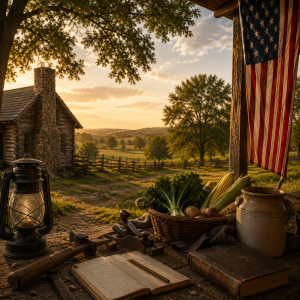
They knew how to feed themselves, preserve food, repair tools, build what they needed, navigate unfamiliar situations, and solve problems without immediately looking for someone else to do it for them. They weren’t necessarily more intelligent than we are, but they were forced to develop a broad range of practical skills simply because there was no alternative. In many ways, they had fewer conveniences but more independence.
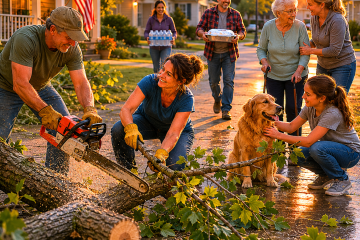
Today we often think of independence as something political, something protected by documents, laws, and institutions. And certainly it is. But for our forefathers, independence was also woven into everyday life. If something broke, they fixed it. If they needed food, they grew it, raised it, hunted it, traded for it, or preserved it. If hardship came knocking, they leaned on family, neighbors, and community. Independence wasn’t something they celebrated once a year. It was simply the way they lived.
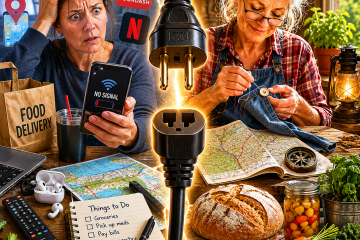
One of the great ironies of modern life is that we’ve gained incredible convenience while sometimes surrendering capability. We can order dinner with a few taps on a phone, yet many people have never baked a loaf of bread. We can instantly navigate to any destination, yet some couldn’t find their way across town without GPS. We have access to more information than any generation in history, but often possess fewer practical skills than the generations that came before us.
Convenience itself isn’t the problem. Convenience is wonderful. Dependency, however, can be a problem, and the line between the two is often thinner than we’d like to admit.
Take Survivor Steve, for example. Survivor Steve loves Independence Day. He owns enough American flags to decorate a small municipality and enough fireworks to make the neighbors slightly nervous. If patriotism were measured in lawn decorations, Steve would be receiving congressional recognition.
Yet when his Wi-Fi goes down for two hours, he begins wandering through the house like a pioneer who has lost contact with civilization.
As amusing as that image may be, most of us have a little Survivor Steve in us. We’ve all experienced that moment when a small disruption suddenly reveals just how much we rely on something. Maybe it’s the internet. Maybe it’s GPS. Maybe it’s the power grid, online banking, or the grocery store. None of those dependencies make us weak. They’re simply part of living in a highly interconnected world.
The real question isn’t whether we should reject modern conveniences. The question is whether we’ve retained enough capability to remain resilient when those conveniences aren’t available.
That’s where preparedness enters the conversation.
Preparedness isn’t about rejecting modern life. It’s about creating options. It’s learning how to cook from basic ingredients, storing water before you need it, maintaining emergency savings, developing practical skills, and building strong relationships with neighbors and family. It’s about cultivating the confidence that comes from knowing you can adapt when circumstances change.
In many ways, preparedness is simply modern independence.
Not complete independence, of course. None of us are truly independent. Human beings have always relied on one another. Communities built this country. Families sustained it. Neighbors helped one another through hardships. The lone wolf makes for an interesting movie character, but history has generally favored cooperation over isolation.
Still, there is a healthy kind of independence that comes from capability. The ability to solve problems, provide for yourself and your family, adapt to changing circumstances, and remain calm when others are panicking creates a freedom that no government can grant and no circumstance can easily take away.
Perhaps that’s one of the lessons our forefathers would most want us to remember. Freedom isn’t merely the absence of oppression; it’s also the presence of capability. The more capable we become, the more options we have. The more options we have, the more resilient we become. And resilience has always been one of the foundations of freedom.
As we celebrate Independence Day this year, perhaps it’s worth asking ourselves a simple question: What am I doing to preserve my own independence?
Not because I reject modern conveniences. I certainly don’t.
But because freedom has always been strongest when paired with capability.
When independence was a lifestyle, people understood that.
Maybe it’s a lesson worth remembering.
After all, preparedness is preserving the independence our freedoms were meant to protect.