Why Flavor Is a Preparedness Asset
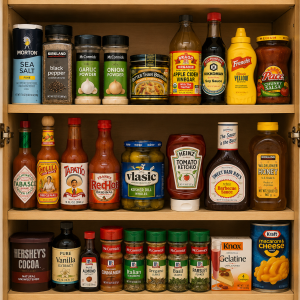 Survivor Steve was feeling pretty good about his preparedness plan.
He had enough rice, beans, wheat, oats, pasta, and other staples to feed a small nation. His pantry was organized, labeled, inventoried, and probably had its own zip code. If preparedness supplies were measured by the pound, Steve was practically royalty.
Then came Day 43.
Breakfast was oatmeal.
Lunch was beans.
Dinner was rice.
Not bad, mind you. Perfectly nutritious. Plenty of calories. Lots of fiber.
But by Day 43, Steve found himself staring at a bottle of hot sauce the way prospectors once looked at gold nuggets.
That’s when it hit him.
He had prepared for hunger.
He hadn’t prepared for boredom.
One of the biggest mistakes people make in food preparedness is focusing entirely on calories. They calculate protein, carbohydrates, fats, shelf life, and storage space. Those things matter. In fact, they’re essential. But there’s another category of preparedness food that often gets overlooked because it doesn’t seem nearly as important.
Flavor.
Now before anyone accuses me of promoting luxury preparedness, hear me out.
This isn’t about becoming a food critic during difficult times. It’s about understanding that food serves more purposes than simply keeping us alive. Food provides comfort. It creates normalcy. It preserves traditions. It improves morale. It gives families something to look forward to.
And sometimes, a familiar flavor can make a difficult day feel a little less difficult.
Imagine two families sitting down to dinner.
Both families are eating rice and beans.
Family number one has plain rice and plain beans.
Family number two has salt, pepper, garlic powder, onion powder, bouillon, salsa, and taco seasoning.
Technically, they’re eating nearly the same thing.
Emotionally, they’re having two completely different experiences.
One meal feels like survival.
The other feels like dinner.
That’s a significant difference.
One of the first items in what I call the Forgotten Pantry is salt. Most preparedness-minded folks already understand its value. Salt enhances flavor, helps preserve food, supports food preparation, and has countless household uses. It’s inexpensive, stores indefinitely, and earns its place in every preparedness pantry.
But salt’s often-overlooked partner is pepper.
Black pepper has been prized for centuries, and for good reason. It transforms bland foods into something far more enjoyable. Rice tastes different with pepper. Eggs taste different with pepper. Soups, stews, vegetables, and meats all benefit from it. Yet many people store years’ worth of staples and only a tiny amount of pepper.
Apparently, they plan to survive, but not season anything.
Garlic powder and onion powder deserve honorable mention as well. If you’ve ever wondered why restaurant food tastes better than food cooked by someone who forgot the seasoning, these two ingredients are often part of the answer. They take up little space, store well, and can transform basic ingredients into satisfying meals.
Then there’s bouillon.
Bouillon might be one of the most underrated preparedness foods on the planet. A spoonful can turn plain rice into a side dish. It can transform water into broth, improve soups, add depth to beans, and make leftovers taste intentional instead of accidental.
Vinegar belongs in the Forgotten Pantry too.
Many of you already know I’m a fan of vinegar. It’s useful for food preservation, cleaning, gardening, cooking, and countless household tasks. But it’s also one of the easiest ways to add brightness and flavor to otherwise repetitive meals. A splash of vinegar can completely change the character of a dish.
Mustard, salsa, soy sauce, and hot sauce all deserve a place in the conversation as well.
These aren’t merely condiments.
They’re morale boosters.
That’s right. I said it.
Morale boosters.
Preparedness-minded people sometimes underestimate the emotional side of resilience. We talk about calories because they’re measurable. We talk about protein because it’s quantifiable. But morale matters too.
Ask anyone who’s spent weeks eating the same meals.
Ask soldiers.
Ask campers.
Ask college students living on ramen noodles.
Ask Survivor Steve around Day 43.
A favorite flavor can make a surprising difference.
The Forgotten Pantry also includes honey, maple syrup, cocoa, vanilla extract, herbs, spices, and seasoning blends. These ingredients don’t just improve food. They preserve traditions.
Think about your family’s favorite holiday recipe.
Think about the smell of cinnamon during the holidays.
Think about homemade soup seasoned exactly the way your grandmother made it.
Those experiences aren’t simply about nutrition.
They’re about comfort.
They’re about memories.
They’re about normalcy.
And during stressful times, normalcy becomes incredibly valuable.
One of the reasons preparedness works so well is because it reduces uncertainty. Familiar meals contribute to that sense of stability. A favorite flavor reminds us that life is still life, even when circumstances aren’t ideal.
That’s why I believe flavor is a preparedness asset.
Not because it’s necessary for survival.
Because it’s necessary for thriving.
At Preparedness Pro, we’ve always believed preparedness is about more than merely surviving. It’s about creating a life that’s resilient, capable, and enjoyable.
Food should reflect that philosophy.
So the next time you’re evaluating your pantry, don’t just count the rice, beans, and wheat.
Take a look at the Forgotten Pantry.
Check your salt.
Check your pepper.
Check your seasonings, spices, sauces, extracts, and flavorings.
Because while calories may keep you alive, flavor helps make life worth savoring.
And if Survivor Steve has taught us anything, it’s that eventually every person reaches a point where hot sauce starts looking like a priceless family heirloom.
0 Comments