 There’s a moment most of us have experienced.
You walk through your front door after a long day, hoping for a little peace… and instead you’re greeted by a pile of shoes that looks like it organized a protest, a kitchen that somehow created dishes while you were gone, and a general sense that your house has been living unsupervised.
And you think, “Ah yes… my sanctuary.”
Except it doesn’t feel like one.
And that’s the problem.
Because in a world that is increasingly loud, fast, and unpredictable, your home shouldn’t feel like just another place you have to manage. It should feel like a place that restores you. Not perfect. Not magazine-worthy. But grounded, peaceful, and intentional.
A place where you can finally exhale.
Preparedness conversations tend to focus on what we store—food, water, supplies, and all the things that give us a sense of security. And those things matter. They absolutely do.
But there’s another question that doesn’t get asked nearly often enough:
What does your home feel like?
Because when something goes wrong—whether it’s a stressful day, a financial strain, or something bigger—you don’t just need resources. You need refuge. You need a place where your mind can slow down, your emotions can settle, and your family can regroup without the noise of the outside world following you in.
Your home should be the place where chaos loses its voice.
You can walk into two homes that look almost identical on paper—same size, same furniture, same general setup—and yet one feels tense and cluttered while the other feels calm and welcoming.
That difference isn’t about money. It’s about intention.
Simple things shape the atmosphere more than we realize. Lighting that’s warm instead of harsh. A home that’s reasonably orderly—not perfect, just not requiring a search-and-rescue mission every time you need your keys. Meals that are planned instead of stressful. Rhythms that feel steady instead of rushed.
Your home doesn’t need to impress anyone. It needs to support the people living in it.
And then there’s the piece that often gets overlooked entirely.
Your home isn’t just a physical space. It’s a spiritual one.
It’s where you pray. Where you reflect. Where you learn, grow, and become better than you were yesterday. In a world that constantly pulls your attention outward—toward noise, distraction, and urgency—your home should gently pull you back inward.
Not in a heavy or rigid way, but in a quiet, steady reminder of what matters most.
This is where you reset.
This is where you realign.
This is where you remember who you are.
Preparedness isn’t just about protecting your body. It’s about strengthening your spirit.
What’s interesting is that a haven isn’t created in one big, dramatic effort. It’s built through small, repeatable rhythms.
Sitting down for a meal together instead of eating on the run. Taking a few moments at the beginning or end of the day to pray or reflect. Choosing conversation over constant scrolling. Having a place for things so your home feels livable instead of chaotic.
None of these things are complicated. But they are powerful.
Because they create stability. And stability is something people crave—even if they don’t always realize it.
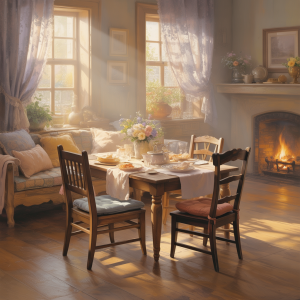 And then there’s food.
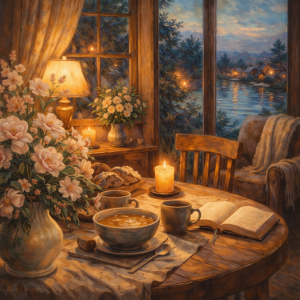
There’s something deeply comforting about knowing you can provide a meal for yourself or your family without stress. It doesn’t have to be elaborate. Sometimes it’s just a warm bowl of soup, fresh bread, or a simple meal shared at the table.
That quiet assurance—we’re okay, we have what we need—is one of the most overlooked aspects of preparedness.
At its best, preparedness doesn’t feel like stockpiling.
It feels like peace.
Of course, we don’t get to control everything happening outside our walls. Life will still be unpredictable. The world will still be noisy. And problems will still show up unannounced, as they tend to do.
But inside your home, you have influence.
You get to decide what comes in, what stays out, and what kind of environment you create for yourself and the people you care about.
Your home can become the place where panic slows down, clarity returns, and peace has room to breathe.
A haven isn’t something you buy.
It’s something you build.
Quietly. Consistently. Imperfectly.
Because the goal isn’t perfection.
It’s peace.
And when your home becomes that kind of place, something shifts.
You don’t just feel more prepared for emergencies. You feel more grounded every single day.
Because preparedness isn’t only about facing the world.
It’s about having a place that restores you when you come back from it.