 There’s always that moment.
You’re standing in your kitchen, maybe holding a mug of cocoa like a reasonable human being, when you hear about something like the Guthrie kidnapping case… and your brain does that awkward little two-step between:
“That’s awful.”
and
“That would never happen here.”
And then—like a smoke detector with impeccable timing—your intuition chirps:
“…are you sure about that?”
Not in a panic way. Not in a “start digging a bunker under the guest bathroom” way. Just in a steady, grounded, grown-up kind of way that says:
“Maybe we stop making things easy.”
Because that’s really what this is about. Most homes don’t need to become fortresses. They just need to stop being convenient.
Criminals Love Easy… and Easy Is Often Unintentional
If homes had reviews from the wrong crowd, too many would read like this:
⭐⭐⭐⭐⭐
“Great lighting for me, none for them. Door unlocked. Bushes provided excellent cover. Would absolutely return.”
The truth is, most crimes aren’t cinematic. They’re opportunistic.
Someone notices:
-
an unlocked door
-
a dark side yard
-
a perfect hiding spot under a window
-
a predictable routine
And just like that, a bad decision finds an easy opening.
Your goal isn’t intimidation.
Your goal is friction.
You want your home to feel like the person at the buffet who put the sneeze guard and a lid on everything. Not worth the effort.
Start With the Front Door (Because… Let’s Not Overthink This)
We’ll begin with the part of your home that literally says, “Please enter here.”
A solid deadbolt. A reinforced strike plate. Screws that are longer than your grocery list. These are not dramatic upgrades—but they dramatically change outcomes.
Add a doorbell camera, and now your front door has something it never had before: accountability.
And lighting? Oh, lighting is the unsung hero.
Because nobody enjoys being suddenly spotlighted mid-bad-idea like they’re auditioning for a one-person play titled “Regret: A Monologue.”
Lock the Door Like It’s Part of the Door (Because It Is)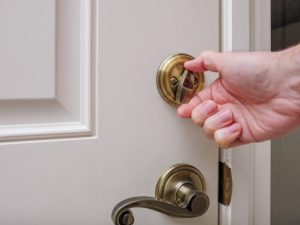
Let’s talk about the simplest, most overlooked security upgrade on the planet:
actually locking your door.
Not “when you remember.”
Not “when you leave for a long time.”
Not “when Mercury is in retrograde.”
Every time.
Because a surprising number of break-ins don’t involve breaking anything.
They involve… turning a handle.
That’s it. No drama. No noise. Just opportunity meeting availability.
Make it automatic:
-
You leave → lock
-
You enter → lock
-
You’re home for the night → lock
-
You’re “just stepping out for a second” → definitely lock
If it feels excessive, that just means you’re upgrading from hope to habit.
Windows: The Quiet Overachievers of Security
Windows don’t ask for much. They just silently hold the line… until they don’t.
A few simple tweaks:
-
locks that actually function
-
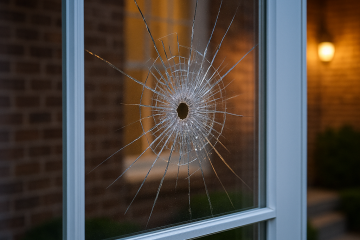
security film to slow down breakage
-
sensors that alert you if something opens unexpectedly
And let’s not forget curtains.
Because displaying your home’s interior layout to the outside world is basically hosting a guided tour titled:
“Here’s Where We Keep Everything Valuable.”
 Landscaping: When Your Shrubs Are Working Against You
Ah yes. The bushes.
Lovely. Green. Also occasionally doubling as a criminal waiting room.
Tall, dense shrubs under windows or along walkways create beautiful curb appeal… and excellent hiding places.
The fix isn’t to declare war on your yard. It’s just to stop offering it as a service.
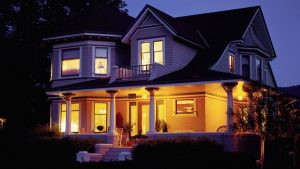
Trim shrubs below window level. Prune trees so there’s visibility underneath. And most importantly—light it up.
Because darkness doesn’t just hide things. It hosts them.
Add motion lights around:
-
shrubbery
-
side yards
-
back entrances
-
anywhere you’d personally feel weird standing alone at night
If a space feels creepy to you, it’s probably comfortable for the wrong person.
Home Alarms: The Polite but Firm “Absolutely Not”
Home alarms get treated like gym memberships.
People have them. They pay for them. And occasionally… they remember they exist.
But even a basic system does three powerful things:
It makes noise. (And criminals hate noise.)
It buys you time. (Which is everything.)
And it deters problems before they start.
That little yard sign?
That’s your house saying:
“We are not the easiest option. Kindly inconvenience yourself elsewhere.”
And most of the time… they do exactly that.
Know Your Neighbors (It’s not like you have to get matching t-shirts!)
You don’t need a neighborhood watch meeting with name tags and baked goods labeled by gluten category.
Just… know people.
Recognize who belongs.
Notice what doesn’t.
Be the kind of neighbor who’d say, “Hey, that’s unusual.”
Because community is one of the oldest security systems in existence—and it still works.
Routines: Comforting for You, Informative for Everyone Else
We all love a good routine. It keeps life moving smoothly.
It also makes life predictable.
If someone can map when you leave, when you return, and when your house sits empty… you’ve unintentionally created a schedule for them.
You don’t need chaos. Just a little variation.
Enough that your life isn’t an open book with chapter titles like:
“No One’s Home Right Now.”
Layered, Not Paranoid
This is where it all comes together.
You’re not relying on one thing.
You’re stacking:
-
locked doors
-
reinforced entry points
-
lit exteriors
-
trimmed landscaping
-
alarms
-
awareness
-
community
Each one by itself is helpful.
Together? They create resistance.
And resistance is what makes most problems go somewhere else.
The Kind of Home That Lets You Exhale
At the end of the day, this isn’t about fear.
It’s about quiet confidence.
It’s about sitting in your home, sipping your cocoa, and knowing you’ve made thoughtful, simple choices that shift the odds in your favor.
Not perfectly. Not dramatically. Just… intentionally.
Because self-reliance isn’t about expecting the worst.
It’s about living in such a way that when life gets unpredictable—
your home doesn’t.
And that kind of peace?
That’s something worth locking in.