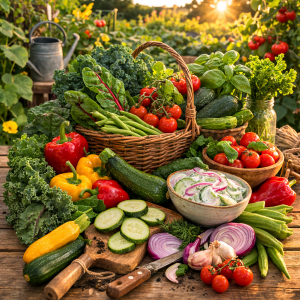
Bountiful harvest that grows all season long
One of the smartest ways to build a productive garden is to choose crops that keep giving instead of producing only once.
Some plants give you a single harvest and they’re done for the season. Others, however, keep producing week after week with minimal effort. Those are the crops that make a garden feel abundant.
For anyone interested in preparedness or self-reliance, these continuous harvest crops are especially valuable. They stretch your growing season, maximize your garden space, and provide a steady supply of fresh food instead of one overwhelming harvest.
When space, time, and energy matter, these plants are hard to beat.
Let’s look at ten crops that can keep feeding you throughout the growing season.
Kale: The Cold-Hardy Producer
Kale may be one of the most reliable greens you can grow.
Instead of harvesting the entire plant at once, you simply pick the outer leaves as needed. The plant continues producing new leaves from the center, which means a single plant can provide harvests for months.
Kale is also extremely nutritious. It’s rich in vitamins A, C, and K, along with antioxidants and fiber that support overall health.
Another advantage is its cold tolerance. Kale can continue producing well into fall and sometimes even after light frosts.
Crispy kale chips with some Vege-Sal sprinkled on it is quite enjoyable.
Swiss Chard: The Garden That Won’t Quit
Swiss chard is one of the most forgiving vegetables you can grow.
Like kale, it thrives on the “cut-and-come-again” method. Harvest the outer leaves and the plant simply keeps producing new ones.
Chard also tolerates heat better than many leafy greens, which allows it to continue producing through much of the summer when lettuce may struggle.
Nutritionally, chard is packed with magnesium, potassium, iron, and vitamins A and C.
But many gardeners grow chard for the first time and then wonder what to do with it.
The good news is that chard is extremely versatile in the kitchen. The leaves can be sautéed with garlic and olive oil much like spinach. They can also be added to stir-fries, soups, pasta dishes, or omelets.
One of my favorite ways to use Swiss chard is in a simple hot and sour soup that turns garden greens into a deeply satisfying meal.
Simple Hot and Sour Chard Soup
Ingredients
-
4 cups chicken or vegetable broth
-
2 cups chopped Swiss chard leaves
-
1 carrot, thinly sliced
-
1 clove garlic, minced
-
1 tablespoon soy sauce
-
1–2 teaspoons rice vinegar
-
1 teaspoon grated ginger
-
1 egg, lightly beaten
-
salt and pepper to taste
Instructions
Bring the broth to a gentle simmer. Add the garlic, ginger, carrots, and soy sauce and cook for a few minutes until the carrots soften.
Stir in the Swiss chard and cook just until the leaves wilt.
Slowly drizzle in the beaten egg while stirring gently to create ribbons. Add the rice vinegar and adjust seasoning to taste.
The result is a warm, nourishing soup with just the right balance of savory and tangy.
Green Beans: The Steady Producer
Pole beans and bush beans both produce generously, but pole beans especially can keep yielding for weeks when harvested regularly.
The secret is simple: the more you pick, the more they produce.
Beans are also a valuable crop nutritionally. They provide plant-based protein, fiber, iron, magnesium, and important B vitamins.
Fresh beans are wonderful at the table, but they also preserve well through freezing, dehydration, or pressure canning.
Zucchini: The Famous Overachiever
Anyone who has grown zucchini knows just how productive these plants can be.
One or two healthy plants can produce more squash than many families know what to do with. Harvesting frequently encourages the plant to continue producing new fruit.
Zucchini is versatile in the kitchen as well. It can be grilled, sautéed, baked into breads, spiralized into noodles, or added to soups and casseroles.
And if the harvest becomes overwhelming, zucchini freezes beautifully.
Classic Zucchini Casserole with Pepperidge Farm Stuffing
This is one of those wonderful recipes that was practically invented for the days when the garden suddenly decides to produce more zucchini than anyone thought possible.
The creamy filling and buttery herb stuffing topping make it a comforting side dish that disappears quickly from the table.
Ingredients
-
4 cups zucchini, sliced or cubed
-
1 small onion, finely chopped
-
1 cup shredded carrots (optional)
-
1 cup sour cream
-
1 can (10.5 oz) cream of mushroom or cream of chicken soup
-
4 tablespoons butter, melted
-
2 to 2½ cups Pepperidge Farm Herb Seasoned Stuffing
-
salt and pepper to taste
Instructions
-
Preheat oven to 350°F and lightly grease a casserole dish.
-
Bring a pot of lightly salted water to a boil and cook the zucchini for about 4–5 minutes, just until slightly tender. Drain well.
-
In a large bowl combine the sour cream, condensed soup, carrots, and onion.
-
Stir the drained zucchini into the creamy mixture.
-
In a separate bowl mix the stuffing with the melted butter.
-
Spread half of the stuffing mixture in the bottom of the baking dish.
-
Spoon the zucchini mixture over the stuffing layer.
-
Sprinkle the remaining stuffing mixture evenly on top.
-
Bake for 30–35 minutes, until hot and golden on top.
Optional (but wonderful)
-
Sprinkle ½ cup shredded cheddar or Parmesan on top before baking.
-
Add a handful of fresh herbs like parsley or thyme if they’re coming out of the garden.
Why Gardeners Love This Recipe
When zucchini season hits, it hits hard. Recipes like this help turn that abundance into something comforting and delicious.
And between the creamy filling and the buttery herb stuffing topping, even people who usually claim they’re “not big zucchini fans” tend to come back for seconds.
Herbs: Small Plants, Big Returns
Herbs may be some of the most productive plants in the garden.
Basil, parsley, oregano, thyme, chives, and mint can all be harvested repeatedly throughout the season. Regular trimming actually encourages fuller growth.
Fresh herbs elevate even the simplest meals, and they are easy to preserve through drying or freezing.
A small herb patch can provide flavor for your kitchen all season long.
Leaf Lettuce: The Cut-and-Come-Again Classic
Leaf lettuce was practically designed for continuous harvesting.
Instead of harvesting the entire head like iceberg lettuce, you simply pick the outer leaves while allowing the center to continue growing.
This method can provide fresh salad greens for weeks from a single planting.
By planting lettuce every few weeks, you can maintain a steady supply of greens throughout the season.
Cherry Tomatoes: The Endless Snack
Cherry tomatoes are among the most rewarding plants you can grow.
Once they begin producing, they often continue until the first frost. A single plant can yield hundreds of tomatoes over the course of a season.
Tomatoes are also nutritional powerhouses. They contain vitamin C, potassium, folate, and the antioxidant lycopene, which supports heart health.
Few plants deliver such a steady stream of garden snacks.
Cucumbers: Consistent Summer Harvests
Cucumbers grow quickly and produce heavily when harvested regularly.
Like beans and zucchini, the key is picking them often. Allowing cucumbers to grow too large signals the plant to slow production.
Fresh cucumbers are incredibly refreshing during hot summer months, and they’re also wonderfully versatile in the kitchen.
But if I’m being honest, one of my favorite ways to enjoy cucumbers from the garden is the way many of our grandmothers used to serve them—cool, crisp cucumbers tossed with red onions in a creamy dressing.
It’s simple.
It’s refreshing.
And it disappears from the table surprisingly fast.
Creamy Cucumber and Red Onion Salad
Ingredients
-
2 large cucumbers, thinly sliced
-
¼ red onion, very thinly sliced
-
½ cup sour cream
-
1 tablespoon apple cider vinegar
-
1 teaspoon sugar or honey
-
salt and pepper to taste
-
1 tablespoon fresh dill (optional)
Instructions
Place the cucumbers and red onion in a bowl.
In a separate bowl, mix the sour cream, vinegar, sugar or honey, salt, and pepper until smooth.
Pour the dressing over the cucumbers and gently toss until everything is coated.
Refrigerate for about 20–30 minutes before serving so the flavors blend.
The result is a cool, creamy salad that perfectly complements a summer meal.
Peppers: A Long Season Producer
Peppers—whether sweet or hot—can produce for months once they begin flowering.
A healthy plant will continue setting new peppers as long as temperatures remain favorable.
Peppers also preserve well through dehydration, freezing, or pickling, making them a versatile crop for both the garden and the pantry.
Okra: The Heat-Loving Producer
Okra thrives when temperatures climb.
In warm climates it can produce steadily through much of the summer, with new pods forming almost daily during peak production.
Now I’ll be honest.
Okra isn’t my personal favorite vegetable.
But many gardeners love it, and because it’s such a productive plant it deserves a place in a preparedness garden.
One preparation method that even okra skeptics often enjoy is roasting.
Simple Roasted Okra
Ingredients
-
1 pound fresh okra pods
-
1 tablespoon olive oil
-
½ teaspoon garlic powder
-
½ teaspoon paprika
-
salt and pepper to taste
Instructions
Preheat oven to 425°F.
Rinse the okra and pat dry. Trim the stem ends and slice pods lengthwise.
Toss with olive oil and seasonings, then spread in a single layer on a baking sheet.
Roast for 15–20 minutes, turning once, until lightly browned and crisp.
A Garden That Keeps Giving
One of the secrets to a productive garden isn’t just what you plant—it’s how often you harvest.
Plants that are picked regularly tend to produce more. By choosing crops designed for continuous harvesting, you turn your garden into a steady food source rather than a one-time event.
That kind of productivity matters, especially when space is limited.
And it reminds us of something important about preparedness.
Sometimes the most resilient systems aren’t the ones that produce the most all at once.
They’re the ones that keep producing…
day after day…
all season long.