 There’s a quiet little miracle happening all around you right now.
Your lights are on.
Your water is clean.
Your roads are drivable (mostly… depending on how ambitious your local potholes are feeling).
Your groceries arrived on shelves like magic.
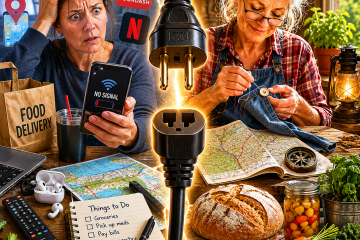
And most of us live our lives assuming this is just… how the world works.
Infrastructure is basically the backstage crew of modern life. Nobody applauds it. Nobody posts a selfie with it. But the second it stumbles, the whole show turns into a middle school talent performance with no microphones and one kid crying near the curtains.
This isn’t a doom-and-gloom article.
This is a friendly but firm tap on the shoulder that says:
America’s infrastructure is impressive… but it’s also aging, strained, and worth paying attention to.
Because the goal isn’t fear.
The goal is margin.
Let’s start with something we all trust every day without thinking: bridges.
The United States has over 600,000 bridges, and roughly 221,800 are considered in need of repair or replacement. That doesn’t mean they’re about to collapse in dramatic movie fashion — but it does mean many are worn, outdated for today’s traffic loads, and operating with less breathing room than we’d like.
It’s the infrastructure version of a kitchen chair that still holds you… but creaks every time you sit down.
And then there are roads.
America has about 4.1 million miles of public roadways, and roughly 39% of major roads are in poor or mediocre condition. Which explains why driving in some places feels less like transportation and more like an extreme sport called Dodge the Pothole: Fury Road Edition.
But roads aren’t just about annoyance.
They’re how food, fuel, emergency services, and everyday commerce move.
When roads degrade, everything downstream slows.
And here’s where things get especially sobering…
Some parts of our infrastructure aren’t just aging — they’re historically old.
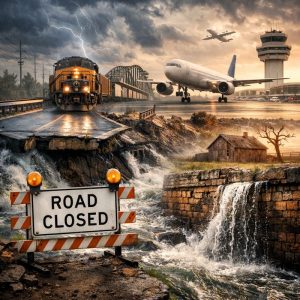
In certain flood-prone regions, levee systems date back to the early 1800s, long before modern engineering standards existed. Many have been reinforced over time, of course — but it’s still startling to realize that some flood defenses protecting communities today were first built for an America with fewer people, fewer cities, and very different storms.
That’s not panic-worthy.
That’s attention-worthy.
Because when heavy rain hits, infrastructure isn’t tested in theory.
It’s tested in reality.
And infrastructure is more interconnected than most people realize.
A bridge repair affects shipping routes.
A washed-out road affects supply deliveries.
A stressed utility system affects everything from hospitals to grocery stores to fuel pumps.
Modern life runs beautifully…
But it runs tightly.
So why are we talking about this?
Not because civilization is collapsing tomorrow.
But because self-reliance isn’t about expecting disaster…
It’s about refusing to be shocked when life gets inconvenient.
Preparedness isn’t fear.
Preparedness is peace.
It’s having a little water stored.
A flashlight that works.
A pantry that gives you breathing room.
A backup plan that turns a disruption into a mild annoyance instead of a meltdown.
Because the question isn’t:
Will the whole system fail?
The real question is:
If something wobbles… will you feel helpless… or just mildly inconvenienced?
And here’s the good news:
America is investing in infrastructure improvements, progress is being made, and these systems are still doing their jobs every day.
This isn’t about despair.
It’s about awareness.
And in the next five articles, I’m going deeper — one system at a time — into the parts of infrastructure that matter most to everyday households:
Next up:
Water Infrastructure — because nothing makes you appreciate civilization faster than realizing you can’t flush.
Then:
The Electric Grid — the nation’s biggest extension cord, powering everything we love and depend on.
Then:
Railways — the steel backbone moving food, fuel, and goods across the country.
Then:
Airports and Air Traffic Systems — where aging infrastructure and staffing strains can ripple nationwide.
And yes… we’re also going to talk about something even more personal:
Hospitals and Healthcare Infrastructure — because modern medicine is incredible, but it isn’t an infinite resource, and a little self-reliance at home can create breathing room when the system is strained.
This series isn’t about panic.
It’s about building margin.
Because infrastructure is the backbone of society…
But self-reliance?
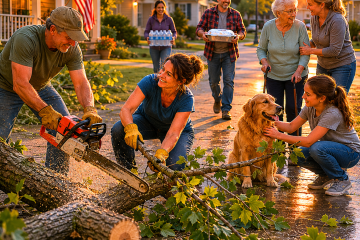
That’s the backbone of the home.
And the goal isn’t fear.
The goal is steady confidence — even when the systems hiccup.